



What to Expect When You Specify Real Wood Cladding
Wood carries a record of its natural origin. At RESAWN, that record begins across New Zealand and North America, where responsibly sourced timber reflects years of growth and transformation. Grain patterns shift, textures emerge, and the individual characteristics of every board create a depth that can’t be manufactured or repeated.
That story doesn’t end when the wood arrives at the jobsite. It continues in how the material moves, weathers, and ages once it becomes part of a building—and understanding that ahead of time is what separates a smooth installation from a surprising one. Specifying real wood starts with understanding the qualities that make it distinct, and how those qualities shape detailing, expectations, and design decisions long before the first board goes up.
Wood Is a Living Material
Wood continuously exchanges moisture with its environment. As humidity and temperature shift, it expands and contracts, primarily across the grain. How much a board moves, and how visibly, depends on species, finish, modification, and how it was installed.
A well-detailed wall assembly gives wood room to move—and just as importantly, room to dry. Accommodating that behavior lets the material respond to changing conditions while maintaining long-term performance.
This capacity to respond to its environment, while still performing as a dependable building material, is what makes wood a living material rather than a static one. It’s also why a sample or material reference can set an expectation for the finished application but can never predict its exact appearance. That distinction is the foundation for everything that follows: movement, weathering, and the finish decisions that shape how a project looks years down the line.
The Vocabulary of Wood Movement—and Why It’s Normal
Once installed, wood continues to adapt to the conditions around it. As it responds to its environment, that movement takes several recognizable forms, each describing how a board settles and shifts over time.
Common forms of wood movement include:
- Cupping — the board curls across its width
- Bowing — it bends along its length, face to face
- Crooking — an edge bends along its length
- Twisting — the corners rotate out of alignment with one another
Sapwood and heartwood, present in different proportions depending on species and cut, absorb and release moisture at different rates. That’s why tone and movement can vary even within a single board—and why two boards cut from the same log can still read differently once installed. None of this is a defect. It’s the same living quality that gives wood its depth in the first place, now playing out over time.
The Longer Arc: Weathering
If movement is wood’s short-term response to its environment, weathering is the long one. Left exposed, wood transforms gradually and continuously shifts in tone and texture as it reacts to sun, moisture, and air over months and years. Because that transformation is inevitable, it deserves the same attention at the start of a project that species and finish get: expectations for how a surface will weather should be set well before installation begins, not discovered afterward.
Wood Modification: Changing the Story, Not the Nature
Movement and weathering are what wood does on its own. Modification is where design intent enters the story. The right process strengthens wood for demanding exterior conditions while preserving what makes the material compelling in the first place. Thermal and chemical modification changes wood at or within its cellular structure to improve how it responds to exposure. This can increase dimensional stability, reduce water uptake, and extend durability—all while preserving the variation inherent to real wood.
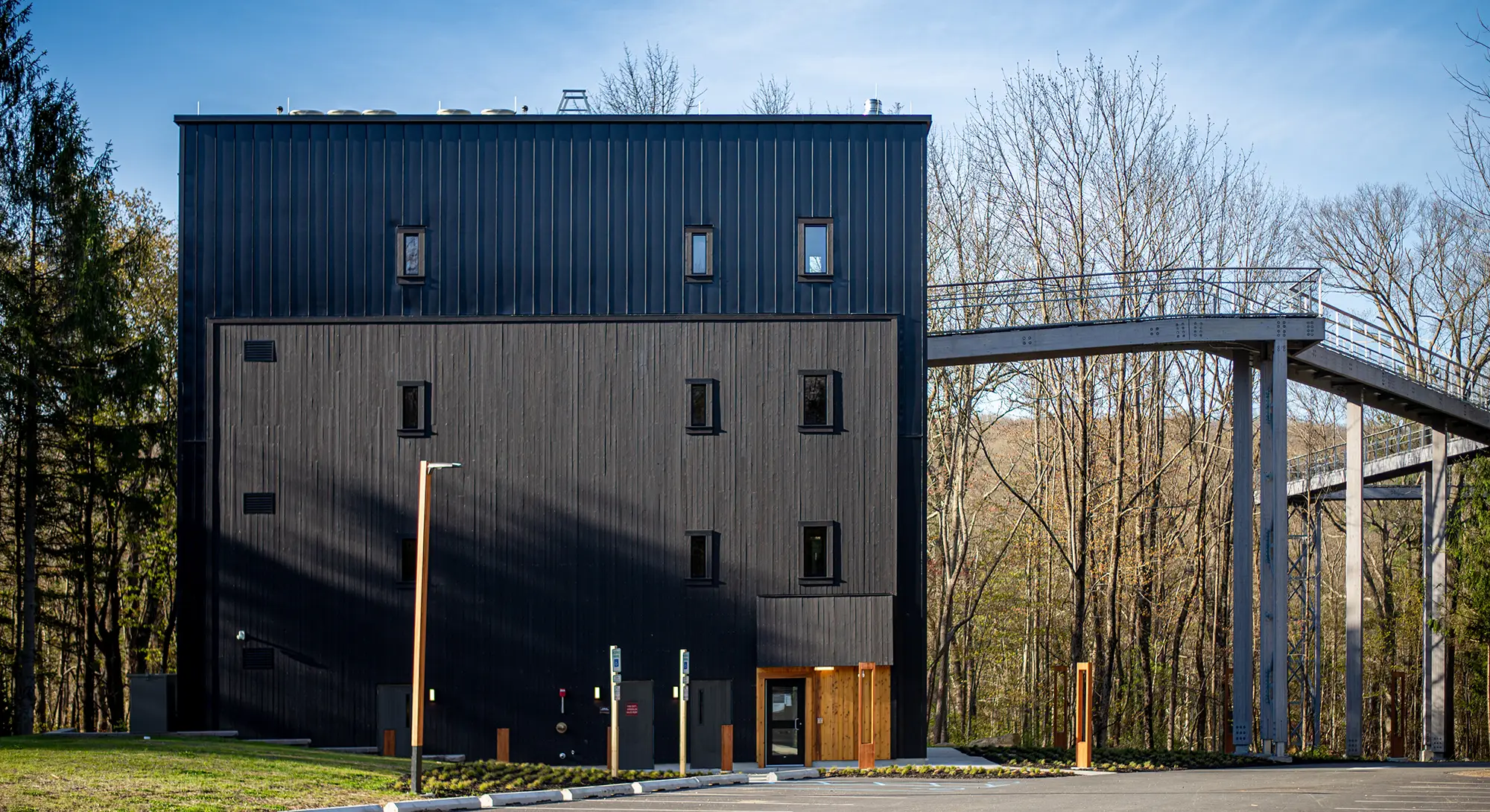
Using charring as a modification method works differently, building protection on the surface rather than within it. Rooted in the Japanese tradition of shou sugi ban, the process uses fire to alter the outer layer of wood into a protective skin, shielding it from extreme environmental damage.
Designing for Movement and Weathering
Wood is cellular and moisture-responsive; the detailing must account for that from the start, giving movement room to happen naturally while keeping the assembly stable and durable over time.
Successful façade systems rely on a few essential principles:
- Allow for movement with consistent board spacing that accommodates seasonal expansion and contraction.
- Provide ventilation and drainage through a properly detailed rainscreen cavity that promotes airflow and drying.
- Maintain proper clearances from grade, roofing, paving, and adjacent materials to limit prolonged moisture exposure.
- Use appropriate fastening methods that secure the assembly while accounting for natural movement.
- Consider orientation and exposure to sunlight, prevailing weather, and site conditions from the start.
The goal is never to prevent wood from changing—it’s to build an assembly that gives the material the right conditions to adapt well.
Managing Expectations Before Installation
By this point, the pattern should be clear: real wood behaves in known, predictable ways, and every stage of specification is a chance to plan for that behavior instead of reacting to it. Through RESAWN’s Mockup Program, project teams can evaluate these characteristics at a larger scale before installation—revealing texture, finish response, and board-to-board variation in a way product descriptions alone can’t.
That’s why RESAWN remains a partner from design through installation—offering technical knowledge, material samples, weathering guidance, and project-specific recommendations that hold to the same standards from first conversation to finished application.