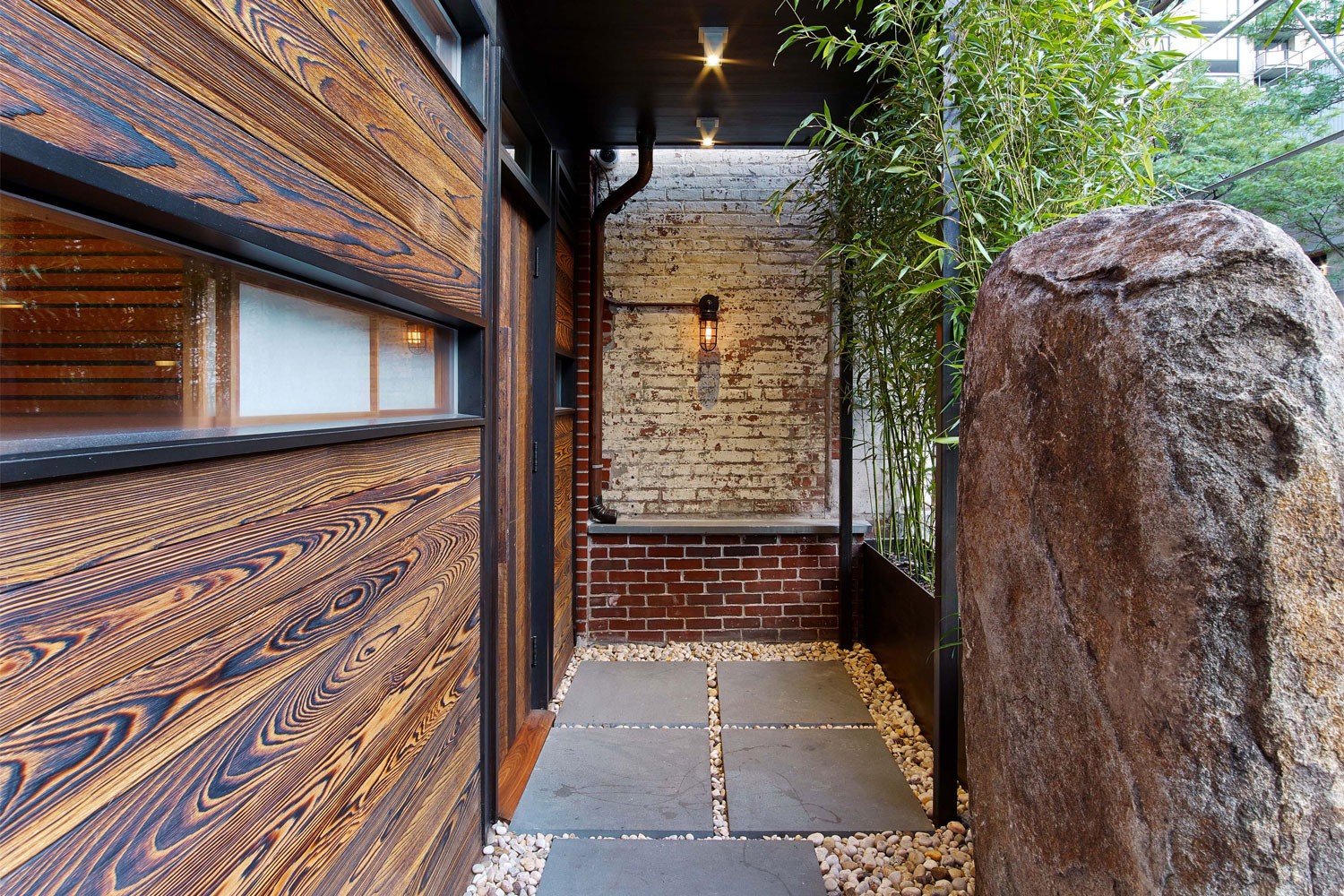
CCS Architecture worked closely with Nancy and Tim Cushman to create O Ya New York. The design brings the ambiance and character of their Oya – Boston to Midtown. Located on the ground floor of a cherished townhouse within the Park South Hotel, the design is a mix of carefully orchestrated old and new.
Exposed brick and concrete are contrasted with crafted Japanese carpentry, glazed kiln tile, steel, and fabric. The main element is the expansive eating counter made from walnut timber. The façade and entry identify the establishment and also defines a transition from urban NYC; where you step down from the street, traverse a micro-Japanese garden of bamboo, gravel, and a large iconic granite boulder brought to the site direct from the quarry, and then enter the restaurant under a steel and wood canopy. The entry way features reSAWN’s TORA shou sugi ban charred cypress is select grade.
Fast Company and the WSJ announced recently that in New York and Portland, two high-rise buildings will be made not from concrete or metal, but a throwback material: good old trees.
From Fast Company:
It seems as if New York City is always under construction. Every few blocks, steel frames and concrete beams are formed and stacked high in the air. Now a new 10-story building in Manhattan is planned that will be unlike any other in the U.S: It will be made almost entirely from wood.
Wood is an old building material that has been getting a new life in taller buildings over the last five years. Around the world, 17 wood buildings have been built that are between seven and 15 stories tall—many of them in Europe. A record-high 35-story wood building is in the planning stages in Paris. But the U.S. has been slow to start exploring the recent advancements in wood materials that have made these taller buildings possible. None exist here today.
Last year, in partnership with the lumber industry, the Department of Agriculture announced a $3 million prize intended to spur tall wood building designs in the U.S.. Today, it announced two winners that will split the money: The 10-story residential condo, slated for Manhattan’s Chelsea neighborhood, and a 12-story retail, office, and apartment building in Portland, Oregon.
In the interest of creating rural jobs, the Agriculture Department has a stake in promoting wood, as does the lumber industry—which has struggled since the housing crisis. But there can also be major sustainability benefits to wood as a building material.
“As cities are growing, they’re using a tremendous amount of concrete and steel, and the problem with that is that concrete and steel have a very big carbon footprint,” says Vishaan Chakrabarti, a principal at SHoP Architects, which designed the New York City project.
In manufacturing and construction, wood generally has a lower carbon footprint than other common building materials. In addition, the wood itself stores extra carbon (at least in the U.S., where logging regulations are strict and trees are farmed, not deforested). Diseased wood from western U.S. forests afflicted by pests such as mountain pine beetle can even be used in newer advanced wood products. Normally, this dead wood adds to the fire risk when left in place.
Building taller and larger structures with wood has only become possible in recent years, as the industry has created denser, engineered wood products that are more flexible, stronger, and more fire resistant than the traditional two-by-four beam. But current U.S. building codes generally allow wood buildings to be only six stories or less, and regulators and designers are naturally wary of trying new methods. The goal of the competition is to demonstrate it can be done.
“If you think about traveling through New York City and seeing buildings being made from steel and concrete, and all of the sudden in the middle of all this, you see this new wood constructed building—it’s going to catch your attention. I think it’s going to create some real interest,” says U.S. Secretary of Agriculture Tom Vilsack.
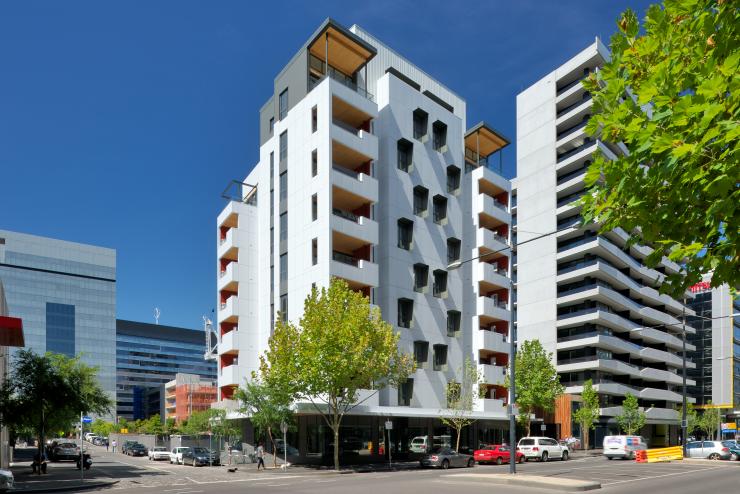
The stylish, upscale, 10-story Forte apartment complex, near the water’s edge in Melbourne’s Victoria Harbour, was built in 2012 with cross laminated timber (CLT), whose structural strength is akin to that of concrete and steel
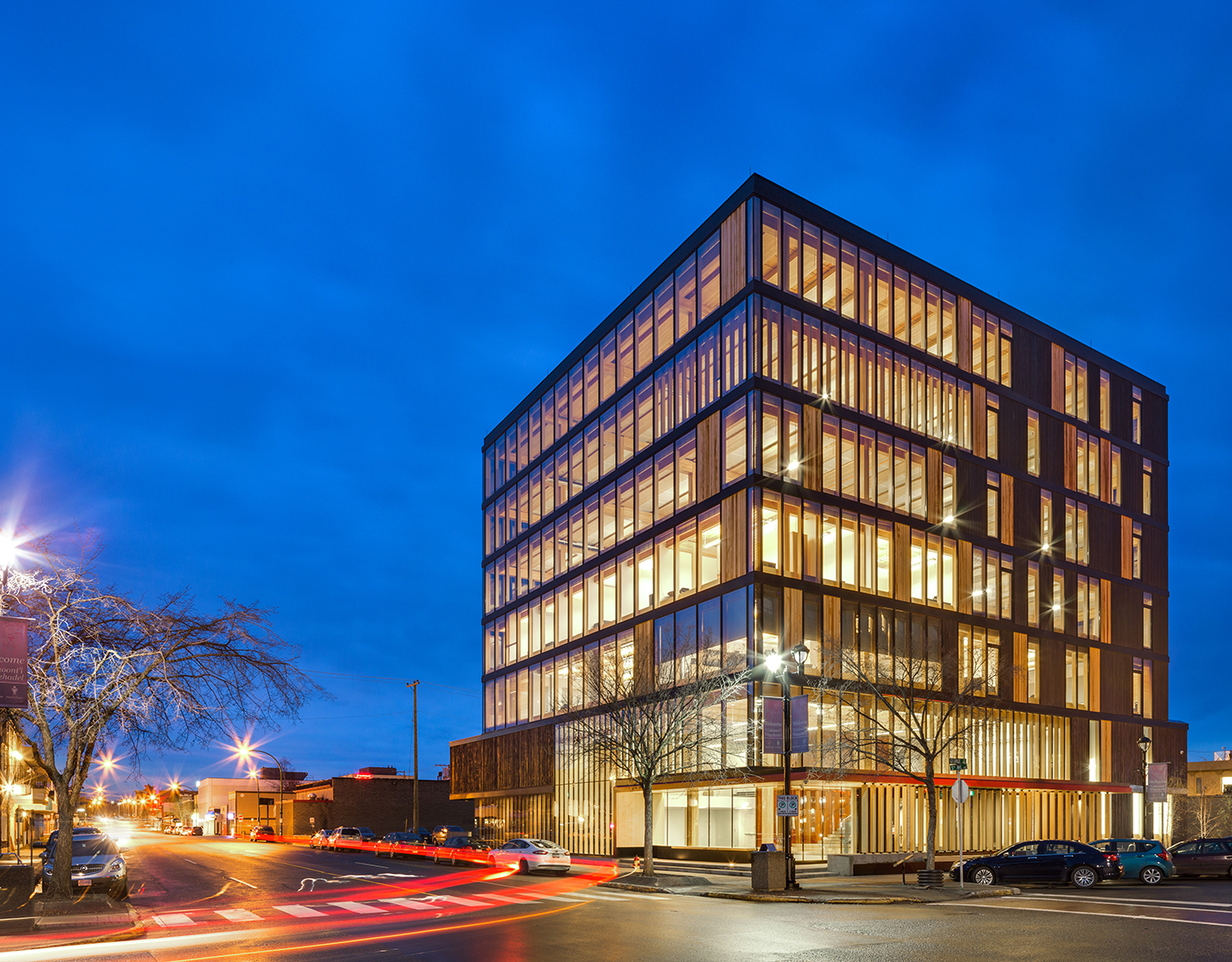
The Wood Innovation Design Centre (WIDC) serves as a gathering place for researchers, academics, design professionals and others interested in generating ideas for innovative uses of wood.
The Wood Innovation and Design Centre in downtown Prince George features inventive use of wood solutions to solve every-day design and construction challenges
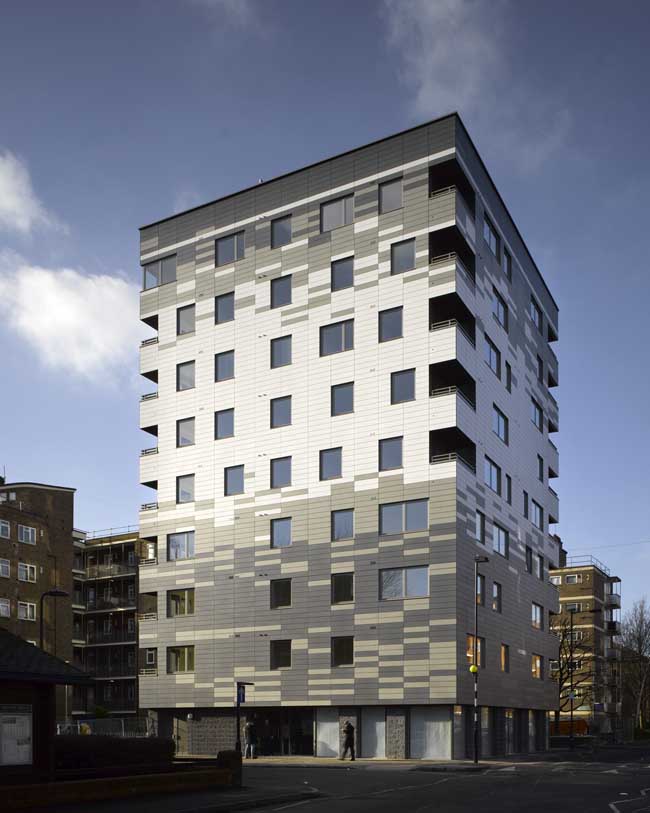
The nine-storey building is the first of this height to construct load bearing walls and floor slabs as well as stair and lift cores entirely from timber.
from The Architect’s Newspaper … a unique shou sugi ban project in Basel, Switzerland by Seattle architects Olson Kundig
“Olson Kundig combines an ancient Japanese wood-burning technique with 21st-century interaction design at Design Miami/Basel Collectors’ Lounge.”
KEVIN SCOTT
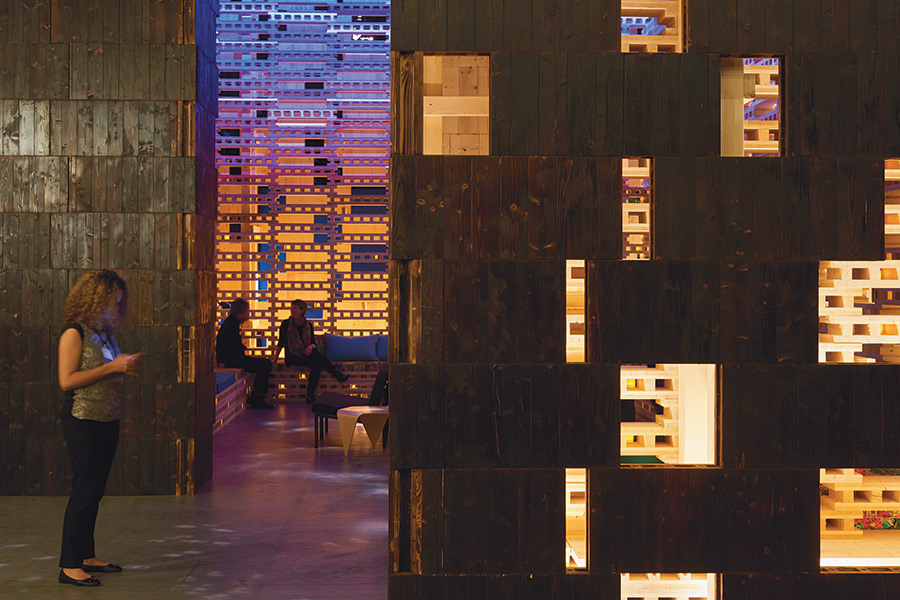
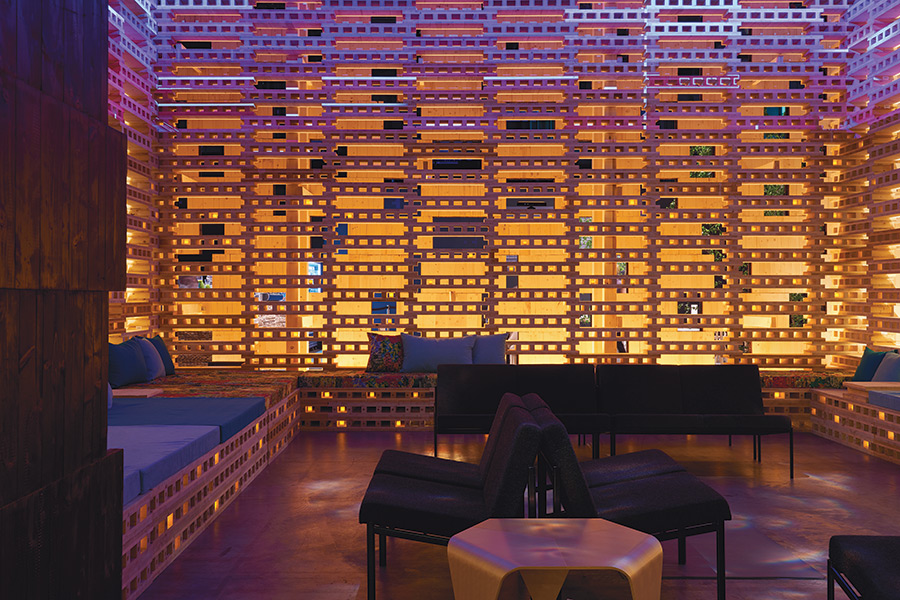
Regional building styles and construction techniques weave a complex history that reflects the qualities, cultures, and narratives of a particular place. Olson Kundig took this to another level when designing Outpost Basel, an architectural pavilion at the Design Miami/Basel Collectors’ Lounge in Basel, Switzerland. The wood construction legacies of several places came together to create a bespoke structure that embodies the global design culture in which we operate.
The architects hail from Seattle, in the heart of the Pacific Northwest’s timber country. They brought their innovative mastery of materials to Western Europe, where companies like the Austrian goliath Holzindustrie Schweighofer are pushing wood technologies forward in new ways. The two worked together in Romania to construct the pavilion out of a wood-block system that is typically used as formwork for concrete and then discarded afterwards. Instead of using the wood bricks to create forms, the architects decided to give them a rich black hue by charring them with a traditional Japanese wood-burning preservation technique, completing the international mélange that makes the project unique.
In the center of the lounge is a large box made from the wood blocks provided by Schweighofer. The designers liked the raw look of the wood blocks, so they left them unfinished. The system is a series of wooden parts that are doweled together, “like IKEA furniture, avoiding screws,” Olson Kundig principal Tom Kundig told AN. The light walls were quickly and easily constructed to form the interior volume, and a series of openings were inserted by shifting the blocks according to the Fibonacci sequence. Once the walls were erected, they were charred using “Shou Sugi Ban,” an ancient technique that has been used in Japan to protect untreated wood against rot and insects. It was also an important way to fireproof villages before modernity. The process involves charring the wood and then using different oils to achieve different effects, while changing the intensity and exposure of the torch to produce varying levels of charring. At first, Schweighofer—who has been a leader in the wood processing industry for more than four centuries—was skeptical of the unusual idea, but eventually executed it at their Romanian compound, treating the blocks before they were shipped to Basel. They used a torch to apply the burn to the surface, and after two coats of torch, they put a sealing oil on the surface which sets the finish and reduces the risk of the black soot rubbing off (on people’s clothes in Basel). The inside of the space was left raw, so that it maintained the warmth of the wood blocks, while the burnt black exterior relates to the rest of the space in which the pavilion sits.
“FOR THE OUTPOST BASEL PAVILION, OLSON KUNDIG INTEGRATED SEVERAL WOOD CONSTRUCTION LEGACIES, FROM A WOODBLOCK SYSTEM IMPLEMENTED WITH AN AUSTRIAN COMPANY IN ROMANIA TO THE ANCIENT JAPANESE PROCESS KNOWN AS SHOU SUGI BAN.”
shou sugi ban wall cladding + black walnut conference table
PINKU is one of the newest designs in the CHARRED collection from reSAWN TIMBER co. To create the CHARRED colors, reSAWN starts with cypress wood in either #2 common grade or select grade. TThe wood is carefully charred, misted with water, cooled, brushed to remove dust and loose debris, and then stained/sealed to create the unique designs you will find in the CHARRED collection. The top coat sealer is applied prior to shipping (for exterior applications, we recommend sealing the face & back). The unique shou sugi ban burning process is what accentuates the wood grain and allows us to create the CHARRED COLORS – rather than a simple stained piece of wood, you get a textured and varied look with black accents from the charring. To maintain a newer aesthetic of the oil finished COLORS, the oil should be reapplied every 2-4 years. However, as weathering, exposure conditions, altitude, and applications can vary, maintenance may be needed sooner and should be performed when visually necessary, regardless of time frame. Alternatively, reSAWN offers two fully CHARRED designs called HAI and MOYASU which require less maintenance long term as there is no wood grain exposed under the top coat due to the full char. Most of the CHARRED COLORS are finished with an exterior grade oil that protects the wood against the elements – JINZU and MIDORI are finished with an interior only oil and should not be specified for exterior applications.
PINKU is featured here along with RSToc. CONFERENCE TABLE 3 in north american black walnut. RSTco. was created to distinguish our increasing work with custom millwork and furniture. The founders and craftsmen of RSTco. have been creating furniture pieces for private customers for 30+ years and reSAWN has grown to a national presence with sales reps and projects around the USA and abroad. Visit our Furniture page for more info or contact us to discuss your project needs.
Discover the products, stories and building teams behind the projects.
Archello is the only platform that tells multiple stories around projects, from the manufacturer to the architect, making it the richest and the most complete platform for architecture and design.
click on the logo to see archello’s story on reSAWN:
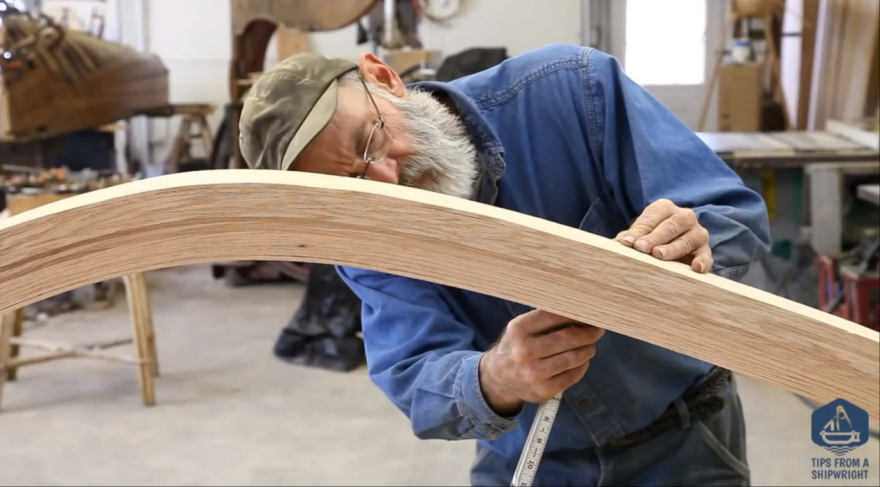
To some, four years of design school sounds like a long time. But in the story of “The Accidental Designer,” we learned that Tom Sullivan became a successful designer/builder after spending eight years as a shipbuilder’s apprentice.
Shipbuilding is something like woodworking or furniture design on a massive scale. The art and science of shaping enormous timbers into structures that are both attractive and seaworthy requires an understanding of wood and tools—from handheld analog to massive machines—that most furniture designers will never have to grapple with. And while a furniture designer may learn the porosities of various woods to understand how each of them will accept stain and finishing, the shipbuilder must learn these things because if they get it wrong, their creations will sink. The eight years versus four starts to make a lot of sense.
That’s just a taste of what’s on offer. Everything from tool usage to finishing to restoring to the actual woodworking techniques are covered, with new videos popping up all the time. Next time it’s slow at work, or you’re just keen to learn something new and maybe find a new skill to master, check out the channel.
With their main facility and building artifact museum and gallery located just west of downtown Chicago, urban remains deals exclusively in the reclamation and recycling of american antique architectural artifacts and other oddities found among commercial and industrial buildings or residential structures. Their vast website collection contains over 20,000 meticulously documented and photographed recovered and/or found artifacts found throughout the united states. New acquisitions are added daily to their respective categories found on the homepage. Urban Remains does not deal in new or reproduction building artifacts.
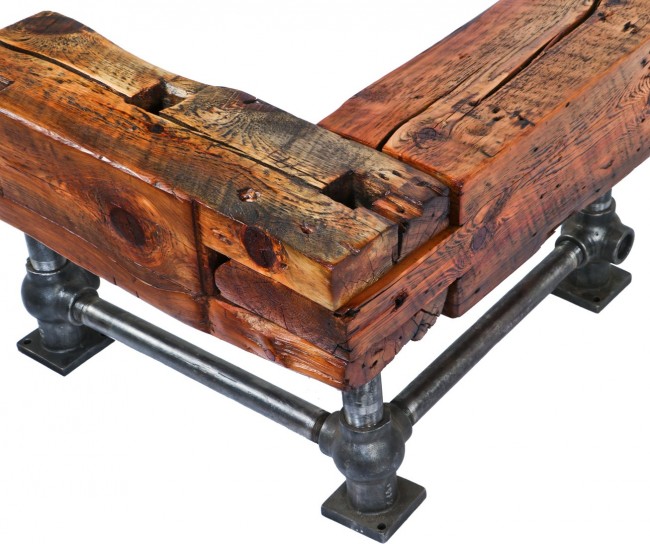
Repurposed american industrial l-shaped stationary sitting bench comprised of solid yellow pine wood residential mortise and tenon sill plate beams – several configurations available
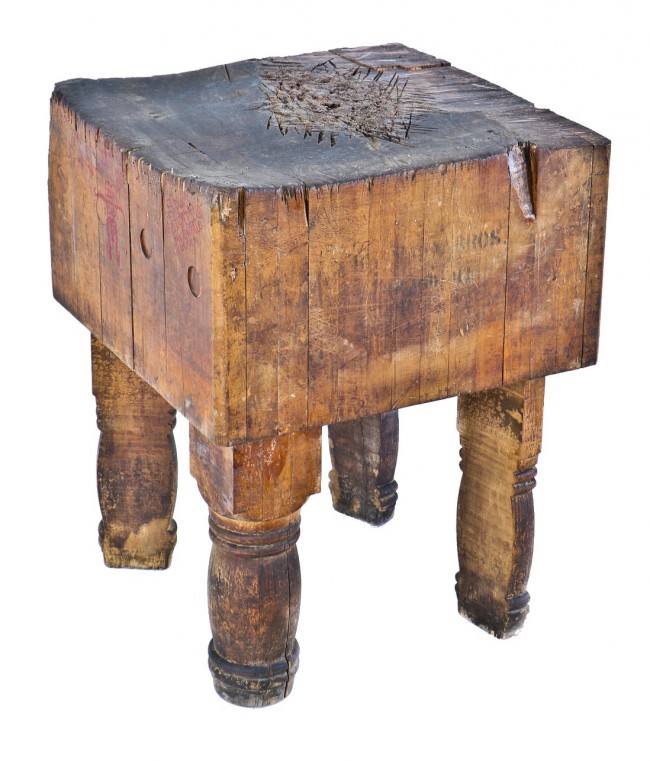
Heavily worn early 20th century american antique industrial freestanding rock hard maple fulton meat parking market wood butcher block table fabricated by john boos & co., effingham, il.
One of several matching late 1930’s american industrial hard to find and highly sought after “pollard brothers” versatile factory locker room benches with original solid maple wood top.
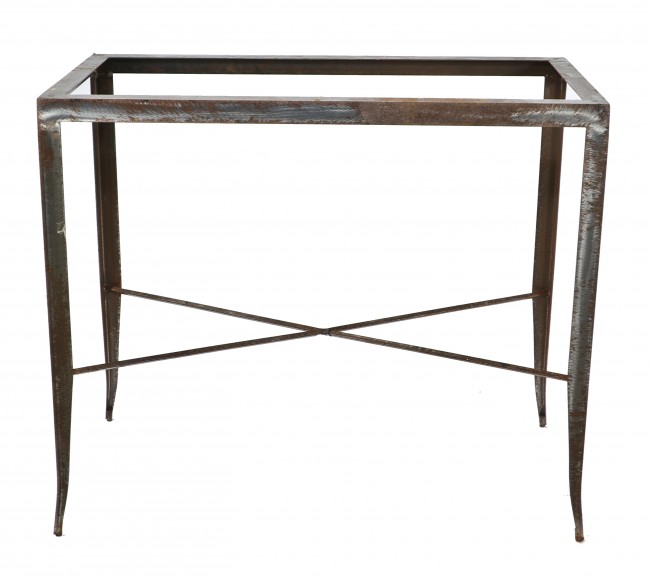
Original and intact vintage american industrial all-welded joint freestanding lightweight factory machine shop table likely fabricated in-house.
All RSTco. furniture is custom built and finished in our woodshop from locally sourced and sustainably harvested wood species. we prefer and specialize in solid wood construction as well as using traditionally joinery wherever possible. we offer a variety of finishes that are both durable and complimentary to the wood. other media in addition to wood are often incorporated into designs such as steel.
Contact us to collaborate on your custom furniture design.
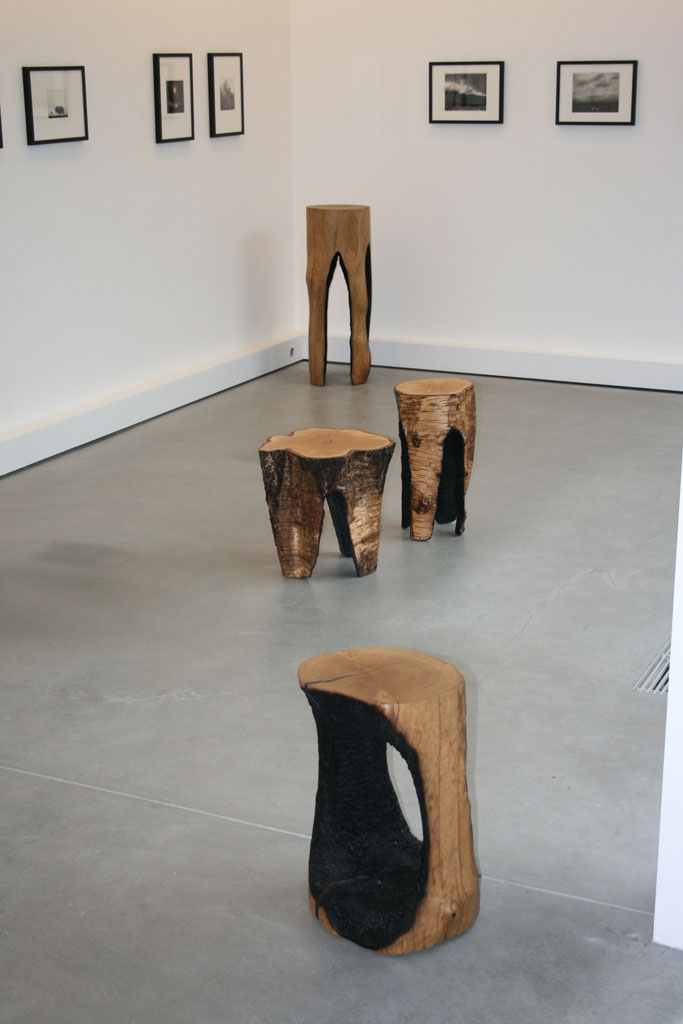
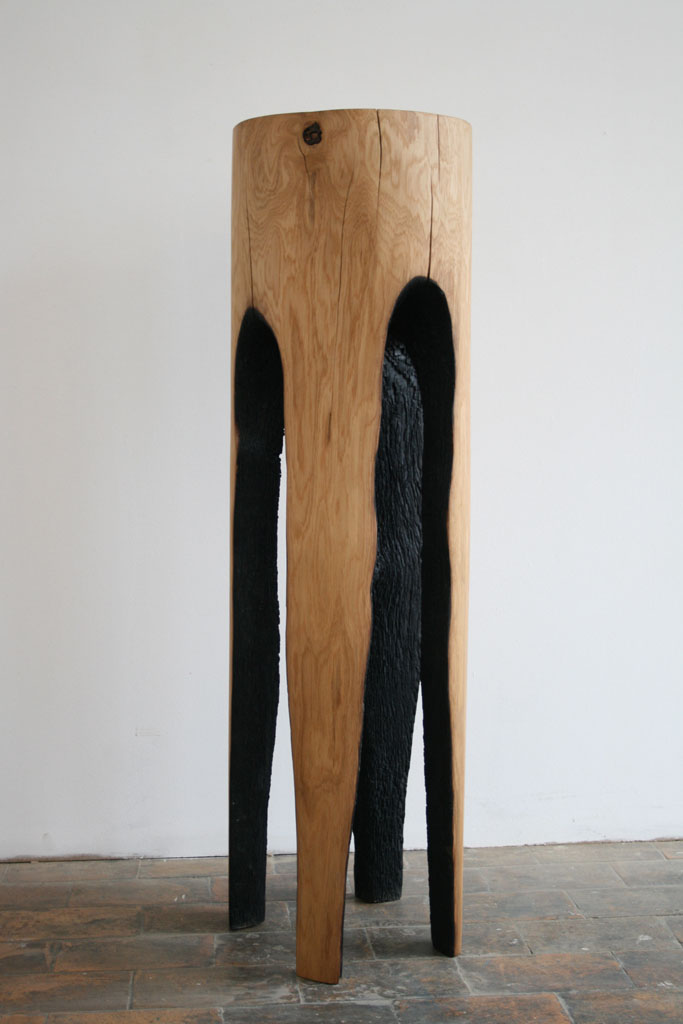
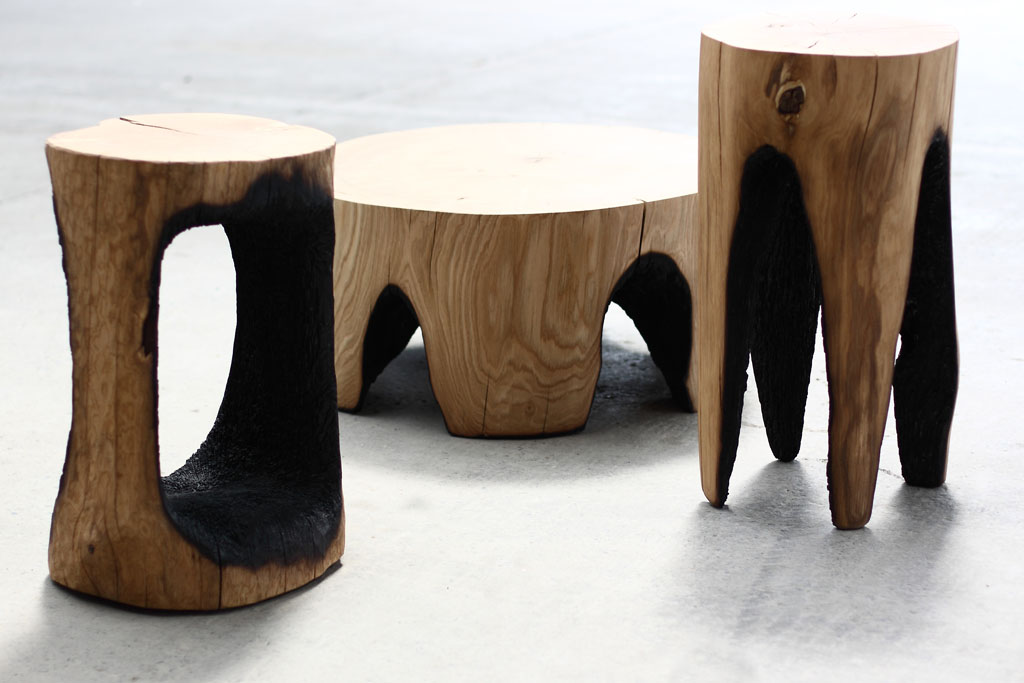
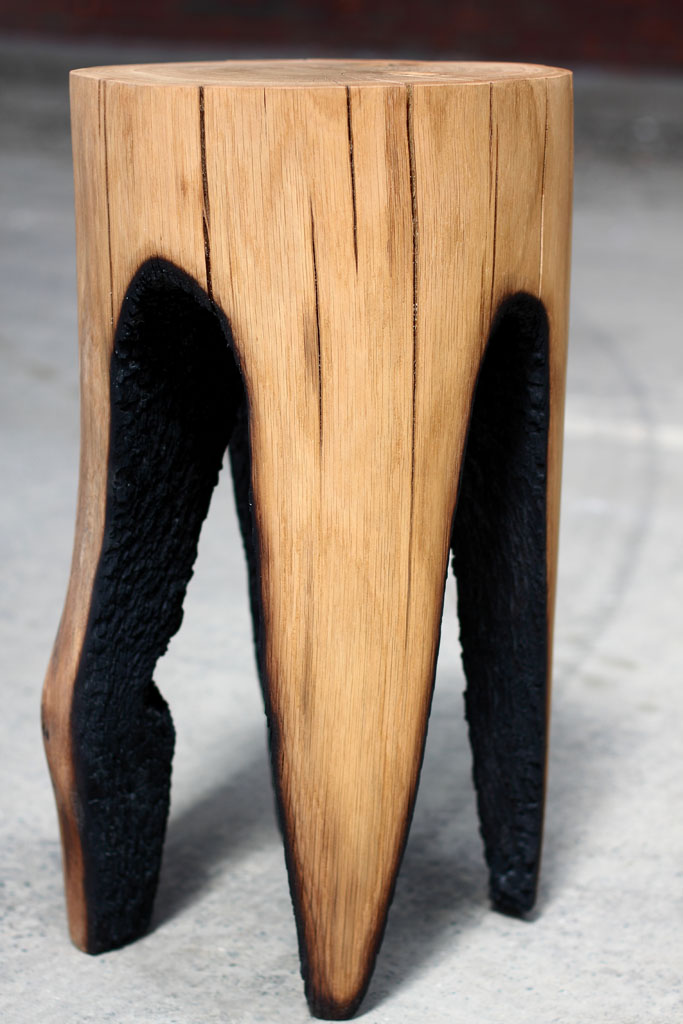
With a combination of roughness and care, Kaspar Hamacher chops logs into sections, strips the bark away and places smaller burning logs on top to create legs from the charred remains, creating this unique design for charred furniture.
Given the natural ingredients of both raw timber and burning embers, the results, while clearly of a kind when set next to each other, are nonetheless always unique.
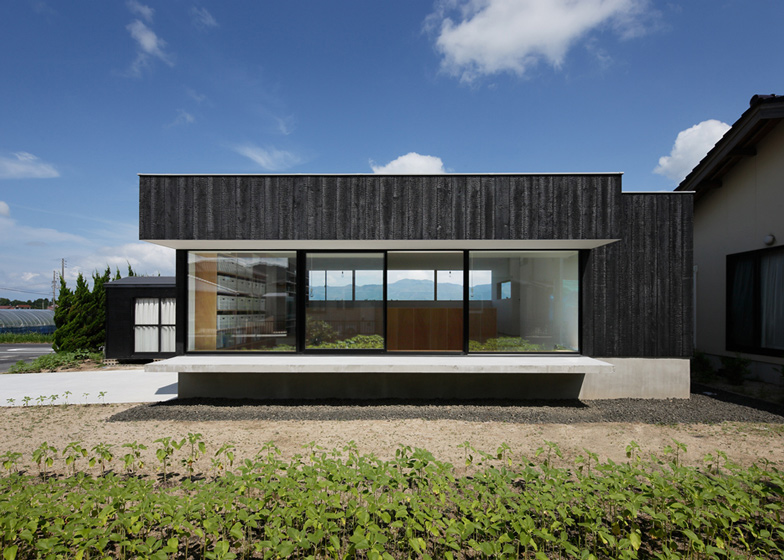
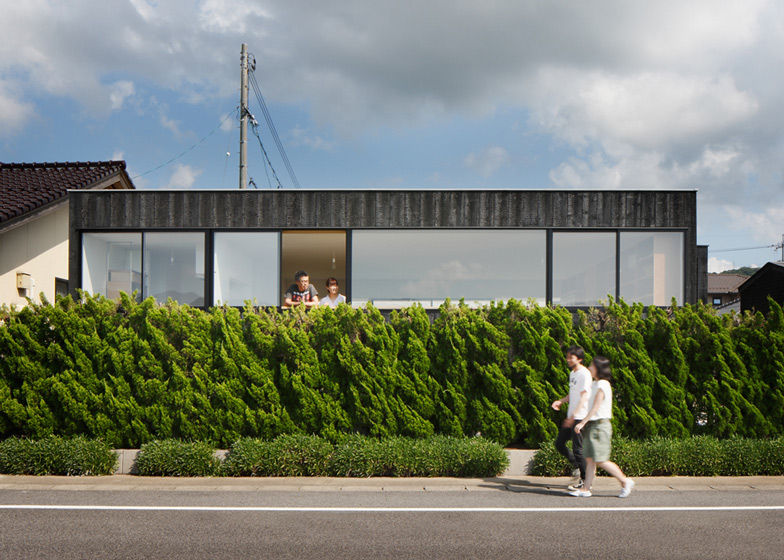
Charred Japanese cedar clads the exterior of this split-level house in Izumo, Japan, by Kanazawa studio Harunatsu-Arch. The architects chose to clad the exterior with charred Japanese cedar boards, giving the building a blackened textural surface that contrasts with the smooth concrete foundation slab.
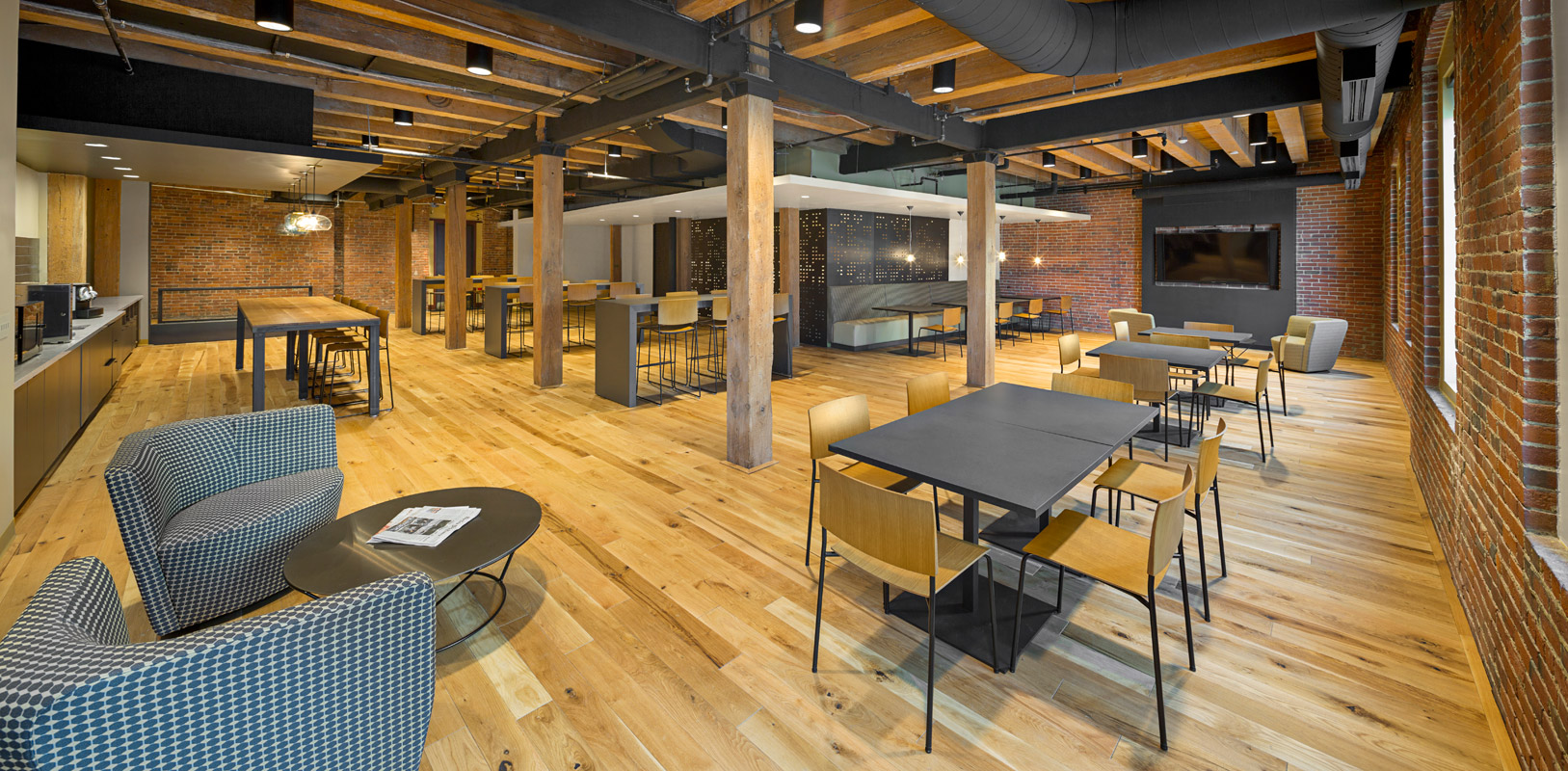
Recently named to INTERIOR DESIGN magazine’s “Top 100 Giants” list of the top 100 interior design firms, based on design fees, square feet designed, and design staff, CBT’s design for Boston law firm Goulston & Storrs features reSAWN TIMBER co.’s STEAMBOAT wide plank white oak flooring, bringing character and warmth to this space:
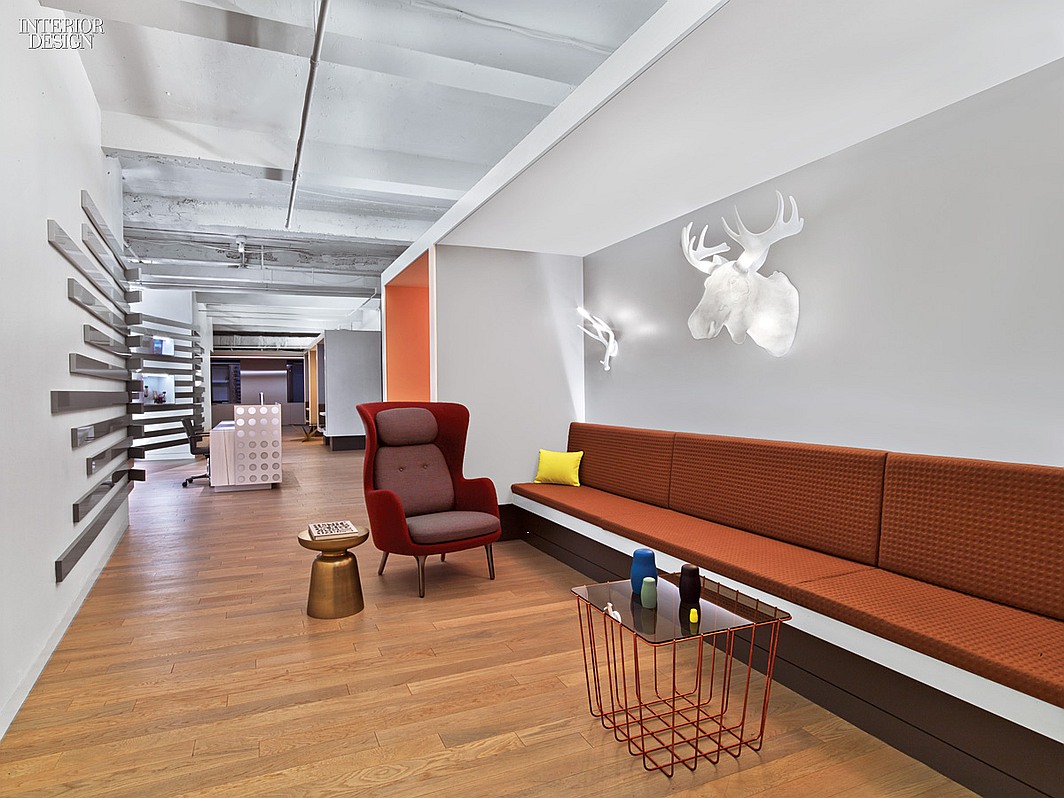
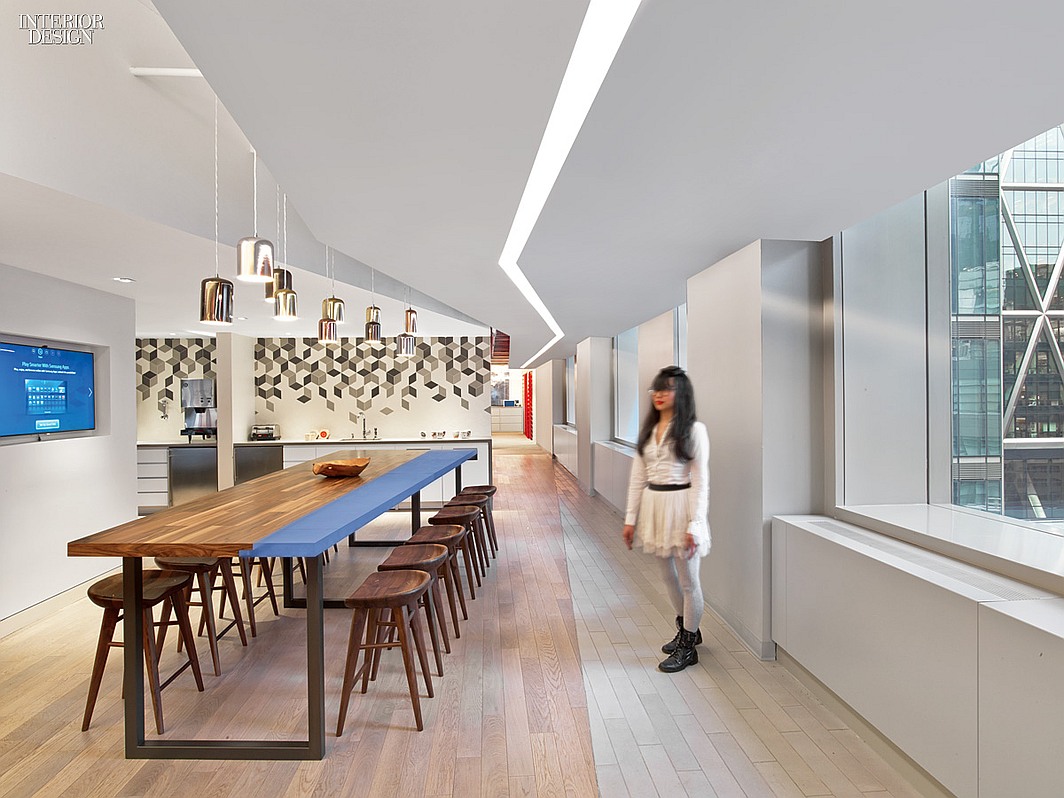
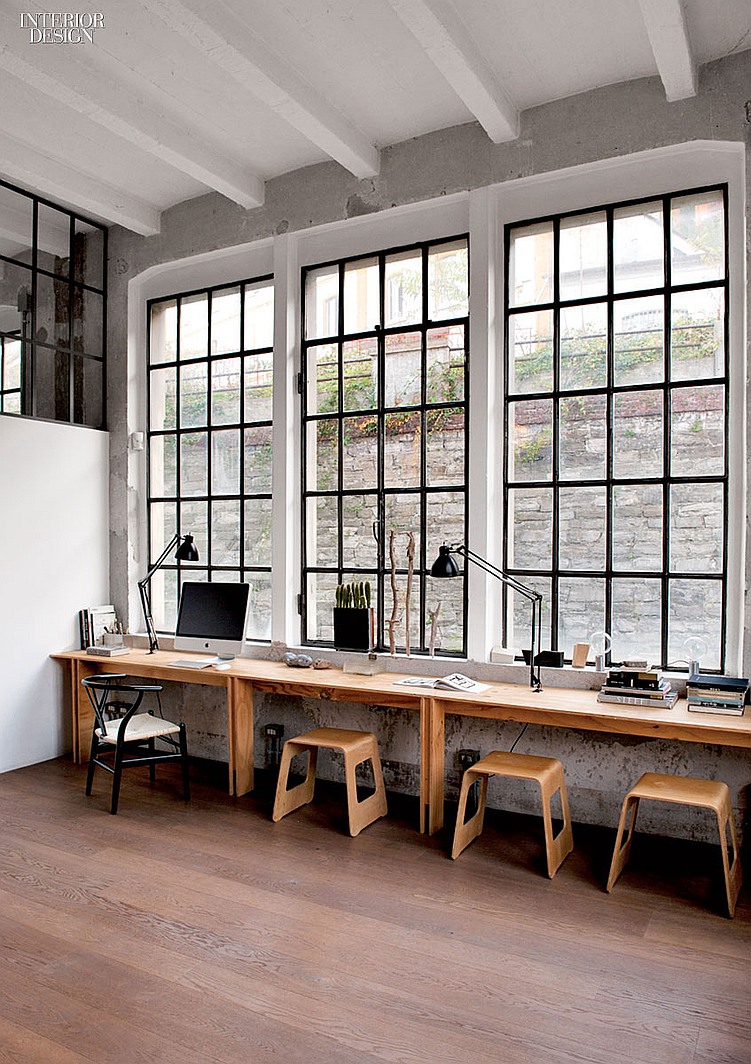
CBT’s design got us dreaming about redesigning our office. Here are 20 office interior designs that make us gaga: